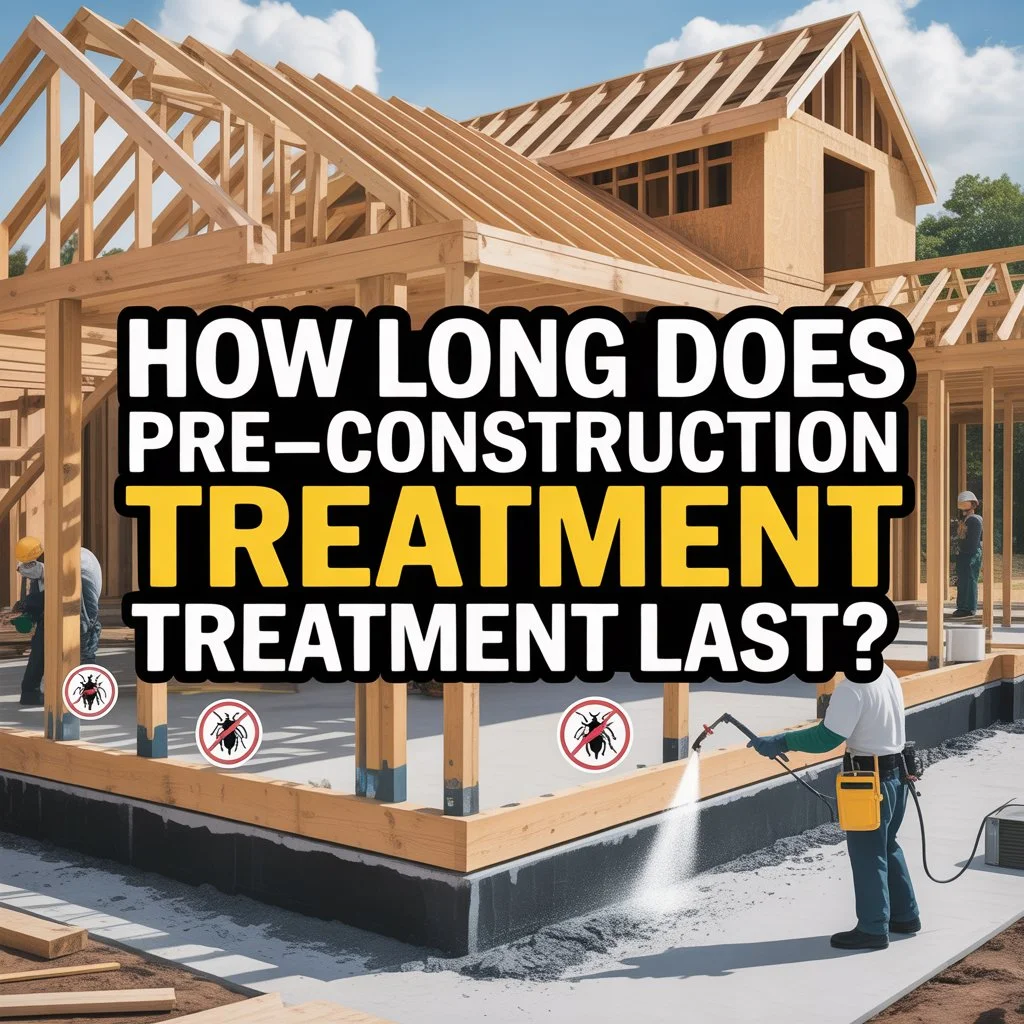
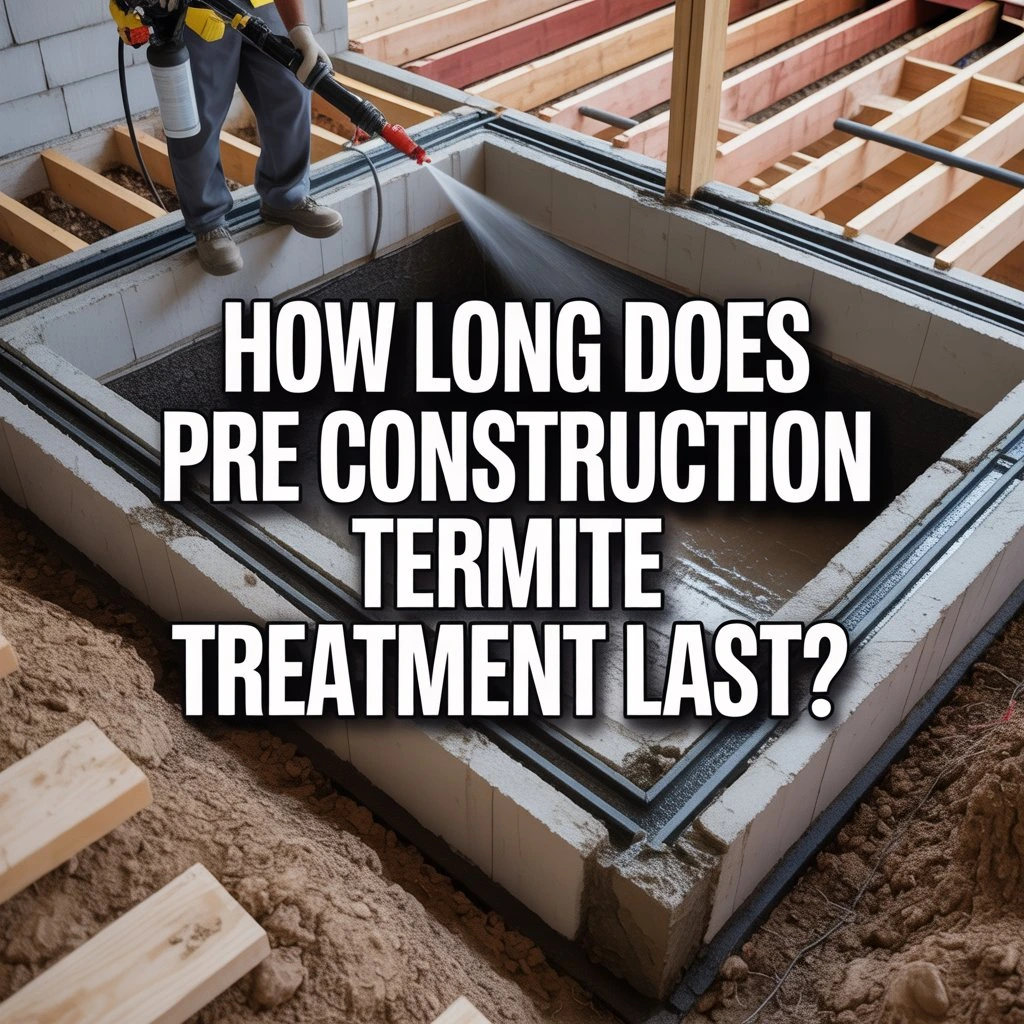
Pre construction termite treatment typically lasts between 5 and 10 years, depending on the type of treatment used, the soil conditions at the site, and the local climate. Liquid termiticide soil treatments, which are the most common method used during new construction, generally remain effective for 5 to 10 years when properly applied. Physical barriers such as stainless steel mesh can last for several decades. According to research published by Mississippi State University Extension, nonrepellent termiticides used for perimeter treatments maintained effective control for 2 to 12 years depending on the active ingredient, with products containing fipronil or chlorantraniliprole providing the longest-lasting protection.
What Is Pre Construction Termite Treatment?
Pre construction termite treatment refers to a set of preventive pest control measures applied specifically during the construction phase of a building, before the foundation slab is poured and before the structure is enclosed. The goal is to create a protective barrier around and beneath the building that prevents subterranean termites from gaining access to the wooden structural components of the finished structure.
According to Polyguard Products, termites cause $40 billion in damage globally each year and destroy parts of more than 600,000 houses in the United States annually, making termite treatments a mandatory consideration in many states and strongly recommended in all others. Pre construction treatment is widely regarded as the most effective window to apply that protection, because applicators can treat the soil beneath the slab, around foundation walls, and through masonry voids before the concrete and finishing work permanently blocks access to those areas.
As STL Pest Control describes the process, termiticide is applied to prepared soil, rock, and roughed-in plumbing just prior to pouring concrete. Once the concrete goes in, the barrier is locked in place and begins providing long-term protection from below, where termites are most likely to attempt entry. This timing is critical. Once the slab is poured, the same thoroughness of coverage becomes impossible to achieve without significant structural disruption.
The Mississippi State University Extension Service, which has published detailed guidance for homebuilders on termite prevention, notes a point worth taking seriously. If you forget to do the termite pretreatment on a new home or an addition to an existing home, the building will not look any different or be any less sound six months after it is completed. But it is almost certain to be infested with termites sometime in the future. Pre construction treatment does not eliminate all risk permanently, but its absence creates a near-certain long-term vulnerability.
How Long Does Each Type of Pre Construction Termite Treatment Last?
Different treatment methods carry very different lifespans, and understanding those differences is essential before choosing an approach or evaluating the coverage your new construction already has. Here is what the research and industry data show for each major treatment type.
Liquid Termiticide Soil Treatments
Liquid termiticides applied to the soil beneath and around the foundation are the most widely used method for pre construction termite protection in the United States. A pest control technician applies the termiticide to the soil before the slab is poured, establishing a chemical barrier that either repels or kills subterranean termites that attempt to pass through it.
According to Angi, liquid termite soil treatments last around five years on average when applied in post-construction settings. However, Polyguard Products, which specializes in termite barrier systems, notes that liquid termite treatments can last from five to twelve years depending on the specific product, the quality of application, and environmental conditions. The pre construction context is favorable because applicators can achieve more complete and even coverage before the slab seals the soil.
The active ingredient in the termiticide makes a significant difference to longevity. Research conducted by Mississippi State University Extension found that nonrepellent termiticides used for perimeter treatments maintained effective control for 2 to 12 years, with fipronil-based products such as Termidor and chlorantraniliprole-based products providing the longest-lasting results in field studies. Repellent termiticides on the other hand tend to break down more quickly and offer a shorter effective window.
Some modern termiticide formulations have extended this range even further. According to Brewer Construction Group, advances in termiticide chemistry have led to products that can last up to 15 years, providing extended protection with a single application when applied correctly and when the treated soil remains undisturbed.
Borate Wood Treatments
Borate treatments involve applying a boron-based solution directly to the wooden framing materials of a structure during construction, before the walls are closed in. Unlike soil-applied termiticides, borates work by penetrating the wood itself and making it toxic to termites and other wood-destroying insects that attempt to feed on it.
In a seven-year study conducted by the Mississippi State University Department of Forest Products, Bora-Care, one of the leading borate treatment products on the market, provided seven years of protection even under conditions of heavy termite pressure. Mississippi State Extension notes that borate treatments are water-soluble, which means they will leach from treated wood that is in direct contact with moist soil or exposed to persistent moisture problems. Properly installed borate treatments that remain dry can provide long-term protection well beyond the seven-year study window.
Borate treatments are not evaluated in the same type of field trials as soil-applied termiticides, which makes direct lifespan comparisons harder to draw. In practice, borate treatments are most effective as a complementary layer of protection applied alongside soil treatments rather than as a standalone solution, particularly in regions with high termite pressure or elevated moisture conditions.
Physical Barriers
Physical termite barriers use non-chemical materials, such as stainless steel mesh, granite stone particles, or crushed basalt, to create a physical obstruction that termites cannot penetrate or squeeze through. These barriers are installed around and beneath the foundation during construction and do not rely on chemical degradation to remain effective.
According to Angi, physical termite barriers can last for several decades because they do not degrade chemically over time. Their longevity depends on the integrity of the installation rather than any ongoing chemical activity. If the barrier remains intact and undisturbed, it continues to function indefinitely. The limitation of physical barriers is that they must be absolutely continuous to be effective. Any gap, crack, or compromised section provides termites with a potential entry point. This is why Mississippi State University Extension notes that physical barriers are not recommended as standalone pre construction treatments but are valuable as an enhancement to chemical treatment programs.
Termite Baiting Systems
Termite baiting systems consist of bait stations installed in the soil around the perimeter of a structure. The stations contain slow-acting toxicants that worker termites carry back to the colony, eventually suppressing or eliminating the colony over a period of months. The U.S. Environmental Protection Agency reports that termite baits have gained popularity in recent years as a less-toxic alternative to broad-spectrum chemical soil treatments.
Unlike soil-applied termiticides, bait systems do not have a fixed lifespan in the traditional sense. According to Big M Pest Control, bait systems work continuously as long as they are monitored and maintained. The bait must be replenished when consumed or weathered, and the stations must be inspected at regular intervals to detect and respond to termite activity. Full colony suppression after initial termite contact with bait stations can take many months to a year or more depending on colony size and foraging patterns. Bait systems are generally better suited as a complementary ongoing monitoring and control method than as a primary pre construction barrier.
Pre Construction Termite Treatment Lifespan at a Glance
| Treatment Type | Typical Lifespan | Best For | Key Limitation |
| Liquid Termiticide (soil) | 5 to 12 years | Subterranean termites | Soil disturbance breaks barrier |
| Borate Wood Treatment | 7 or more years | Wood framing protection | Leaches in wet conditions |
| Physical Barriers | Decades if intact | Long-term perimeter protection | Any gap creates entry point |
| Termite Bait Stations | Ongoing with maintenance | Colony elimination over time | Requires regular monitoring |
What Factors Affect How Long Pre Construction Termite Treatment Lasts?
Two properties treated at the same time with the same product can see very different protection timelines depending on the conditions surrounding each site. Understanding these variables helps homeowners and builders set realistic expectations and plan for inspections and retreatment at the right intervals.
Soil Type
Soil composition is one of the most significant factors in determining how long a liquid termiticide treatment remains effective. According to Brewer Construction Group, sandy soils allow termiticides to leach downward more rapidly than clay soils, which hold the chemical barrier more firmly in place. Porous or gravelly soils present a similar challenge. Sites with these soil types may see the effective life of a treatment trend toward the lower end of the 5 to 12 year range, and may require retreatment sooner than sites built on clay-heavy ground.
Rainfall and Local Climate
Heavy rainfall accelerates the breakdown and downward movement of soil-applied termiticides. In high-rainfall regions, particularly across the Gulf Coast states where termite pressure is already highest, the combination of aggressive termite populations and frequent rain events can shorten the effective window of chemical treatments compared to what laboratory or controlled field studies suggest. Angi specifically notes that in regions with high rainfall, termiticides may leach out of the soil faster, reducing their protective period. Conversely, in arid regions where rainfall is minimal, treated soil retains its chemical barrier longer.
Quality of the Original Application
A treatment applied with gaps in coverage, at insufficient concentration, or under conditions that diluted the termiticide, such as rain during or immediately after application, will not perform to its rated lifespan. Elevate Constructionist emphasizes that proper quality control during application, including confirming even spray coverage and overlap, is essential to achieving the full protection window that a product is designed to deliver. A poorly applied treatment may begin to show vulnerabilities well before the five-year mark even with a premium product.
Soil Disturbance After Treatment
Once a liquid termiticide treatment is applied to the soil, the integrity of that barrier depends on the treated soil remaining in place. Landscaping work, utility installations, drainage modifications, and foundation waterproofing projects that involve digging near the foundation all create the potential to break the chemical barrier and open entry routes for termites. Better Termite and Pest Control recommends not digging within one foot of the foundation after treatment, and calling the pest control company before any construction or landscaping work that involves soil near the structure.
Organic Content in the Soil
Soils with high organic matter content tend to absorb and break down termiticides more rapidly than mineral-heavy soils. This is a less commonly discussed factor, but Big M Pest Control identifies high organic matter as one of the soil-related variables that can reduce treatment longevity. Builders and homeowners in areas with rich organic topsoil should factor this into their inspection and retreatment planning.
The Termite Species Present in the Area
Not all termites behave the same way. The University of Maryland Extension notes that termite colonies can hold hundreds of thousands of individuals and last for decades. Formosan subterranean termites, which are found across much of the southern United States and continue to spread into new regions, are significantly more aggressive foragers than the eastern subterranean termite found throughout the rest of the country. In areas where Formosan termites are active, the pressure on chemical barriers is higher, and retreatment intervals may need to be shorter.
Signs That Your Pre Construction Termite Treatment May Be Failing
Pre construction treatment provides strong protection during its effective life, but it is not a permanent shield. Knowing what to look for helps you catch problems before significant structural damage occurs.
Mud tubes on foundation walls or interior surfaces: Subterranean termites build mud tubes to travel between the soil and wood in your structure while maintaining the humidity they need to survive. Finding mud tubes on your foundation or basement walls is a clear sign that termites have bypassed or penetrated the chemical barrier.
Hollow-sounding wood: Termites eat wood from the inside out, leaving a thin outer shell that sounds hollow when tapped. If wooden floors, walls, or structural beams sound hollow in areas where they previously did not, termite damage may be present.
Swarms of winged termites: Winged termites, also called swarmers or alates, emerge from established colonies to start new ones. Seeing swarms of winged insects inside or immediately around your home, particularly in spring, is a strong indicator of an active nearby colony. According to This Old House, companies like Orkin and Terminix offer retreatment guarantees when evidence of live termites is found during the warranty period.
Unexplained moisture damage or warped flooring: Termite damage often mimics water damage. Floors that buckle or warp without an obvious plumbing cause, or walls that blister in areas where there is no water leak, can indicate termite activity beneath the surface.
The treatment is approaching or past its expected lifespan: According to Better Termite and Pest Control, annual inspections are essential to keeping a warranty active and catching problems early. If your original treatment was applied more than five years ago and you have not had an inspection recently, that alone is sufficient reason to schedule one.
How to Extend the Life of Your Pre Construction Termite Treatment
The effective lifespan of a pre construction termite treatment is not fixed. The way you maintain the property after construction has a direct impact on how long the original treatment continues to perform and how quickly you will need retreatment.
- Schedule annual termite inspections. Angi recommends annual termite inspections even for properties with recent treatment, because termite damage can progress significantly before it becomes visible without a professional inspection. An annual check keeps your warranty active and catches early activity before it becomes a costly repair.
- Control moisture around the foundation. Better Termite and Pest Control recommends fixing leaks quickly, keeping at least six inches of clearance between soil and siding, and maintaining crawl space humidity below 60 percent. Moisture accelerates the breakdown of termiticides and attracts termites to the area simultaneously.
- Do not disturb the treated soil zone. Avoid digging within one foot of the foundation and always consult your pest control provider before any landscaping or drainage work near the structure. Soil disturbance is one of the most common reasons a chemical barrier fails prematurely.
- Keep wood and cellulose materials away from the foundation. STL Pest Control recommends keeping firewood, lumber scraps, and dead wood away from the structure’s perimeter. These materials attract termite foragers and can lead them to discover and probe the treated zone more aggressively.
- Ensure proper grading slopes away from the foundation. Water pooling against the foundation saturates the treated soil zone and accelerates chemical breakdown. Maintaining a grading slope that directs water away from the foundation is one of the simplest and most effective steps a homeowner can take to extend treatment longevity.
- Understand your warranty terms. According to This Old House, retreatment-only warranties are the most common type offered by pest control companies. These require that live termites be found before retreatment is provided at no extra cost. Some companies offer more comprehensive warranties that also cover repair costs. Knowing exactly what your warranty covers and how to keep it active is as important as the treatment itself.
Pre Construction vs. Post Construction Termite Treatment
One of the most frequently asked questions homeowners and builders have is whether pre construction treatment is genuinely superior to post construction treatment, or whether the two approaches deliver similar results. The answer, based on both research and practical experience in the industry, is that pre construction treatment offers meaningful advantages when properly executed.
The primary advantage is access. Before the slab is poured and the structure is enclosed, pest control technicians can treat the soil beneath the entire footprint of the building, around all foundation walls, through all masonry voids, and around all plumbing penetrations. This comprehensive coverage is impossible to achieve after construction is complete because the slab, walls, and finished surfaces permanently block access to those areas.
Better Termite and Pest Control summarizes this advantage clearly: new homes often get longer-lasting treatment because applicators can build a complete barrier before the structure goes up. Post construction treatment typically focuses on the accessible perimeter of the building and can leave interior areas undertreated compared to what pre construction application achieves.
That said, pre construction treatment alone is not a permanent or self-sustaining solution. The Mississippi State University Extension is explicit on this point, noting that termite pretreatments do not last forever and that ongoing monitoring and yearly inspections remain essential regardless of how thorough the original application was. The combination of a properly applied pre construction treatment with annual inspections and prompt retreatment when needed gives a structure the best long-term protection available.
Frequently Asked Questions
How long does pre construction termite treatment last?
Pre construction termite treatment typically lasts between 5 and 10 years for liquid soil-applied termiticides. Research from Mississippi State University Extension found that nonrepellent termiticides maintained effective control for 2 to 12 years depending on the active ingredient. Physical barriers can last several decades if undisturbed. The exact lifespan depends on the treatment type, soil conditions, rainfall levels, and the quality of the original application.
Does pre construction termite treatment need to be reapplied?
Yes. No pre construction termite treatment lasts permanently. Liquid termiticides break down over time in soil, particularly in wet climates or sandy soils. Annual inspections are recommended to monitor treatment effectiveness and detect any termite activity before significant damage occurs. Most pest control companies offer retreatment warranties that cover reapplication if live termites are found within a defined period.
What is the longest-lasting pre construction termite treatment?
According to Mississippi State University Extension research, products containing fipronil, such as Termidor, or chlorantraniliprole provided the longest-lasting control in field studies, maintaining effective protection for up to 12 years. Physical barriers made from stainless steel mesh or granite particles can last several decades without degrading if the installation remains intact and undisturbed. Modern termiticide formulations can last up to 15 years according to Brewer Construction Group.
What factors reduce how long termite treatment lasts?
The main factors that shorten treatment lifespan are sandy or porous soil types that allow termiticides to leach downward quickly, heavy rainfall that accelerates chemical breakdown, high soil organic matter content, disturbance of the treated soil zone through digging or landscaping, and gaps or inconsistencies in the original application. Addressing moisture issues and avoiding soil disturbance near the foundation are the most effective steps a property owner can take to extend treatment longevity.
Is pre construction termite treatment required by law?
Pre construction termite treatment is legally required in several U.S. states, particularly in the South and Southeast where termite pressure is highest. Many local building codes and some lender requirements for new construction financing also mandate pre construction treatment. Requirements vary by state and municipality, so builders and homeowners should verify local code requirements with their contractor or pest control provider before construction begins.
How do I know if my termite treatment has stopped working?
Signs that a termite treatment may have failed include mud tubes on foundation walls or interior surfaces, hollow-sounding wooden structural elements, unexplained warping or buckling of floors, swarms of winged termites inside or near the structure, and visible termite damage to wood. An annual professional inspection is the most reliable way to detect treatment failure before it results in significant structural damage.
Can I do pre construction termite treatment myself?
Pre construction termite treatment should be performed by a licensed pest control professional. The application requires precise timing within the construction sequence, professional-grade termiticides that are not available for retail purchase, and proper calibration of application rates to achieve the concentration required for long-term effectiveness. Improper application, including gaps in coverage or incorrect dilution, can leave the structure vulnerable and void any manufacturer warranty on the product used.
How much does pre construction termite treatment cost?
The cost of pre construction termite treatment varies by the size of the structure, the treatment method used, and the region. Liquid soil treatments for a standard new construction home generally range from a few hundred to over a thousand dollars depending on the square footage of the foundation. This cost is typically arranged and paid for by the building contractor as part of the overall construction budget, as noted by Mississippi State University Extension.